
Festival
Sankranthi
సంక్రాంతి
 January 14, 2027 (Thursday)
Sankranthi (Makar Sankranti) is one of the most important harvest festivals of Andhra Pradesh and Telangana, celebrated when the Sun enters Capricorn (Makara Rashi) — marking the end of winter and the beginning of longer days.
Significance
Sankranthi is a solar festival — one of the few Hindu festivals determined by the solar calendar. The Sun's northward journey (Uttarayana) begins, symbolising light, warmth, and auspiciousness. It is a three-day festival: Bhogi (bonfire day), Sankranthi (main day), and Kanuma (cattle worship).
Panchangam details for Thursday, January 14, 2027:
 Source: Prokerala API · Hyderabad (IST)
Telugu Year
Season
Hemanta Rutuvu (హేమంత ఋతువు) - Pre-Winter Season
Month
Pausha / Makara Maasam (పుష్య మాసం)
Paksha
Shukla Paksha (శుక్ల పక్షం)
Tithi
Panchami (పంచమి) — 5th day
Tithi Start Time
2:48 AM IST (Jan 14) — ends 12:38 AM IST (Jan 15)
Nakshatra
Rohini (రోహిణి) till 10:47 PM, then Mrigashira (మృగశిర)
Yoga
Harshana (హర్షణ)
Karana
Bava (బవ) from 2:48 AM
Sunrise
6:55 AM IST
Sunset
5:58 PM IST
Brahma Muhurtham
5:18 AM – 6:07 AM IST
Amrutha Gadhiyalu
Durmuhurtham

Traditions & Practices
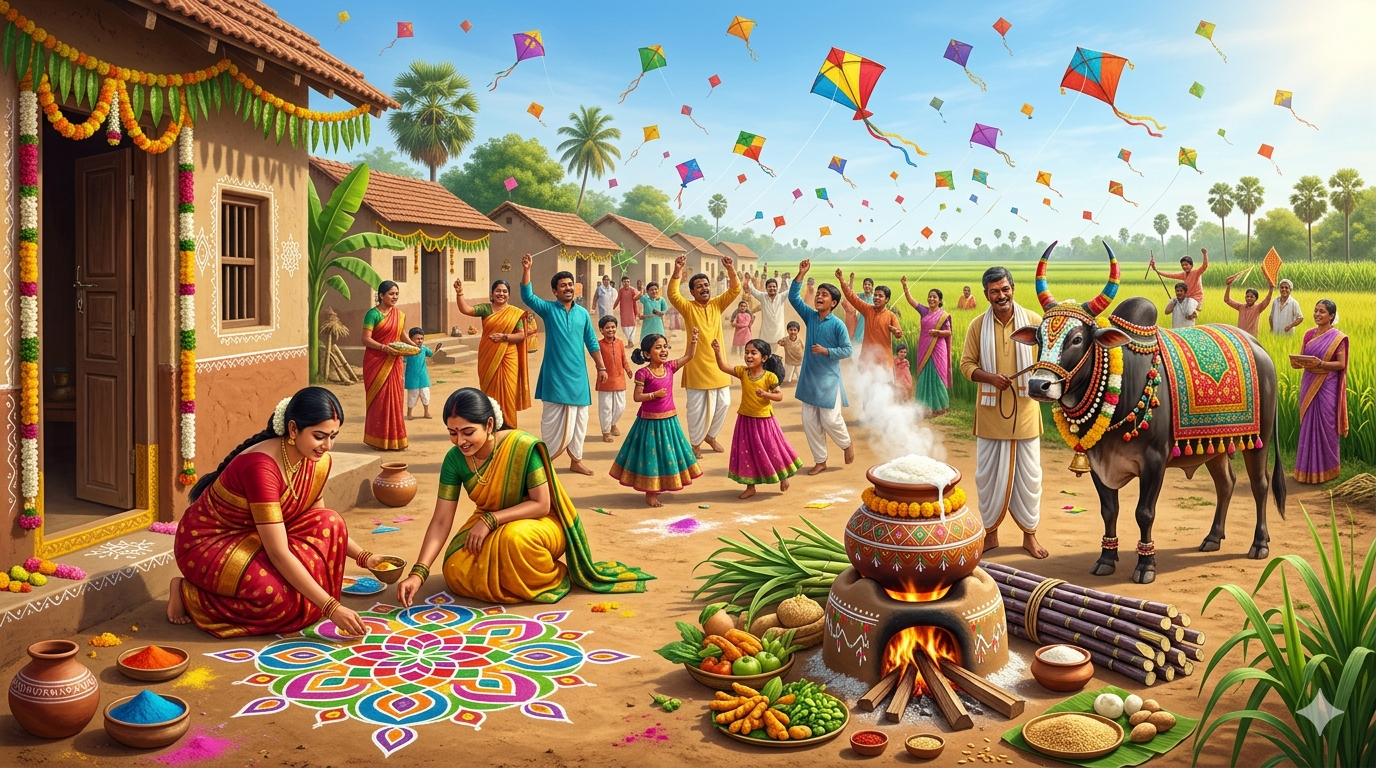
Bhogi — bonfire on the eve of Sankranthi to discard old items and welcome new beginnings
Muggu (Rangoli) — elaborate rice flour kolams drawn at doorsteps, often decorated with cow dung balls
Kite flying (Patam Etta) — skies filled with colourful kites on Sankranthi day
Kanuma — worship of cattle and farm animals as symbols of prosperity
Til-gul (sesame & jaggery sweets) — exchanged with the saying 'til-gul ghya, god god bola' (take sweetness, speak sweetly)
Haridasu — wandering bards singing devotional songs at doorsteps
Traditional dress: women in new silk sarees, children in new clothes

Sankranthi Subhakankshalu! (సంక్రాంతి శుభాకాంక్షలు!)
Wishing you and your family a blessed Sankranthi!